Fancier's Guide
How to Ensure Proper Ventilation in Your Pigeon Loft
A practical guide to loft ventilation for racing and fancy pigeons. Learn how to avoid draughts, control humidity and ammonia, and keep your birds healthy year-round in the UK.
· Ecco Sheds & Lofts
Good ventilation is one of the most important factors in a successful pigeon loft. Without it, moisture builds up, ammonia from droppings lingers, and respiratory problems can spread through your birds. Too much draught, however, and you risk chills and stress, especially in winter. Getting the balance right makes a real difference to bird health, condition and performance.
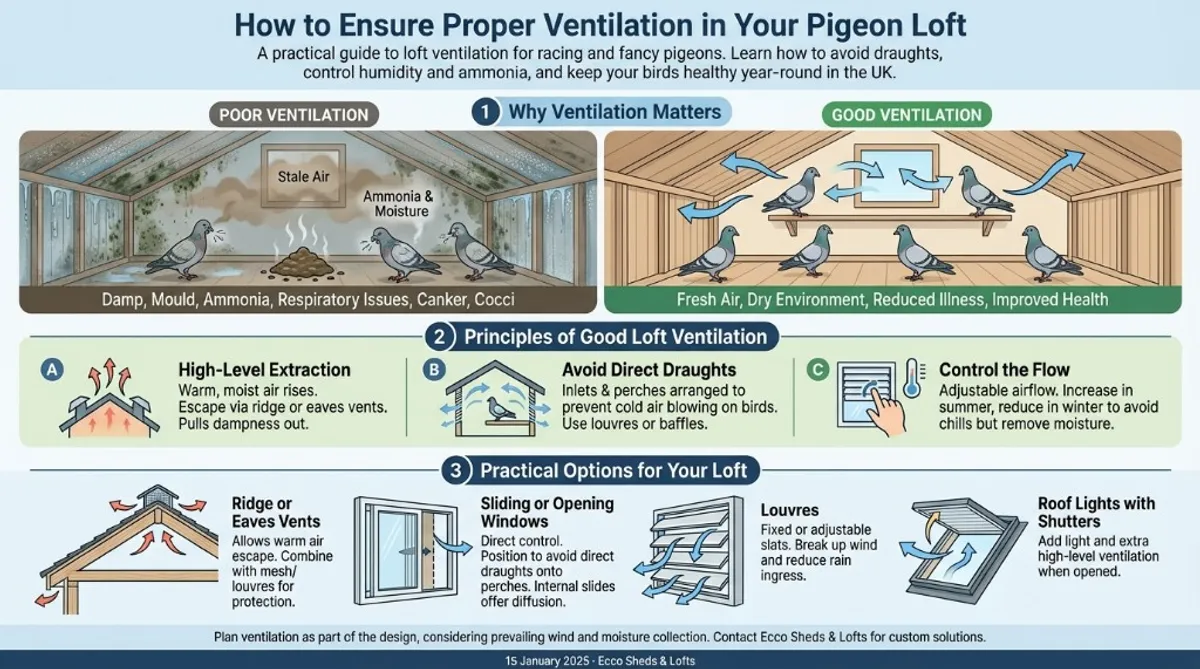
Why ventilation matters
Pigeons produce a lot of moisture through breathing and droppings. In a closed or poorly ventilated loft, that moisture condenses on walls and ceilings, encouraging mould and creating a damp environment. Damp lofts are linked to canker, cocci and respiratory issues. Ammonia from droppings also builds up and can irritate airways and eyes. Ventilation exchanges stale, humid air for fresher air without creating a constant cold draught that can lower resistance and make birds more prone to illness.
Principles of good loft ventilation
High-level extraction
Warm, moist air rises. Letting it out at ridge or eaves level (via vents, louvres or small openings) pulls it out of the loft. This works best when combined with low-level fresh air inlets so that air moves steadily through the space rather than stagnating.
Avoid direct draughts on the birds
Inlets and perches should be arranged so that cold air doesn’t blow straight onto perching or nesting birds. Use louvres, mesh or baffles to diffuse incoming air, and site perches and nest boxes away from the main flow.
Control the flow
Ventilation should be adjustable. In summer you may want more airflow; in winter you’ll want to reduce it to avoid overcooling while still removing moisture. Sliding windows, louvres or adjustable vents give you that control.
Practical options for your loft
- Ridge or eaves vents – Allow warm, moist air to escape along the roof line. Can be combined with mesh or louvres to keep out rain and pests.
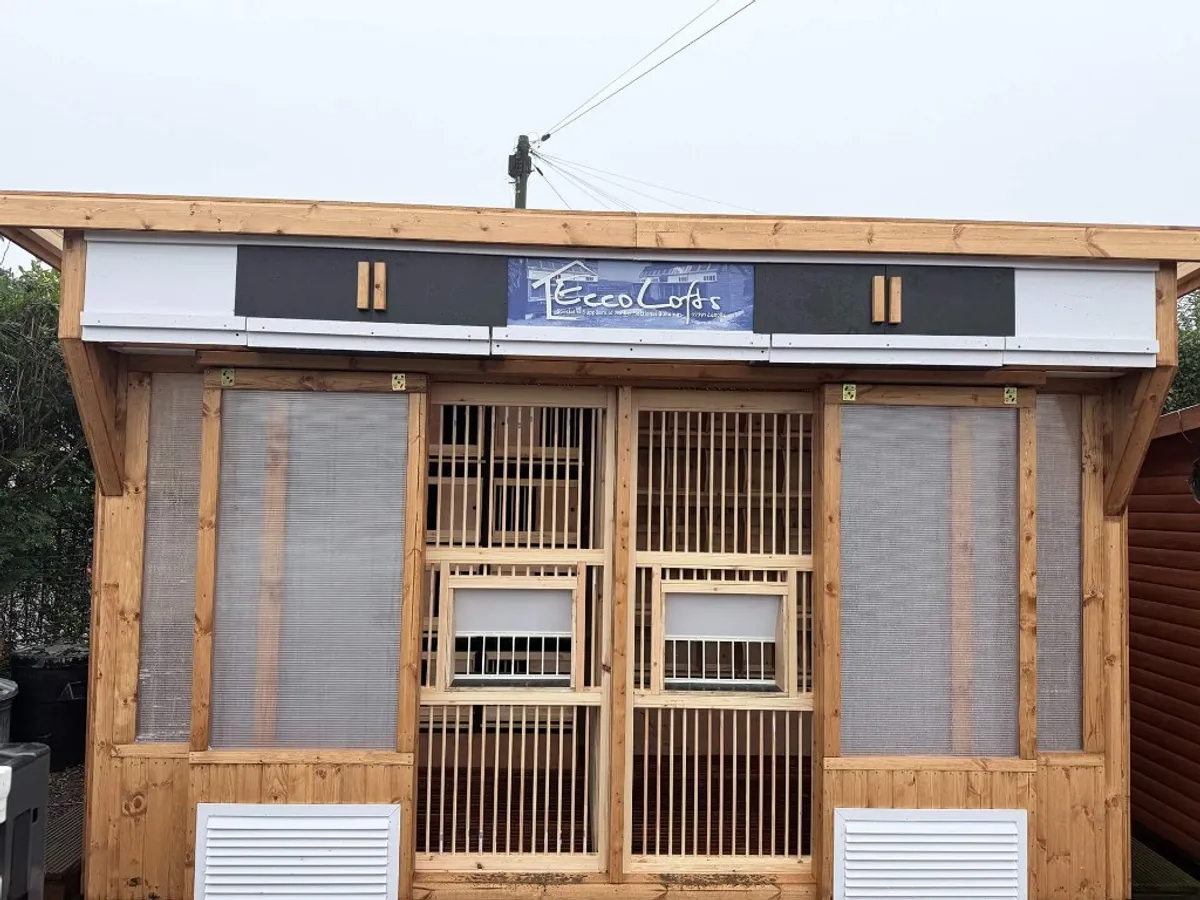
- Sliding or opening windows – Give you direct control. Position so they don’t create a direct draught onto perches. Internal sliding windows (as used in many of our lofts) let you open the aviary or front without a full blast of cold air into the compartment.
- Louvres – Fixed or adjustable slats that allow airflow while breaking up direct wind and reducing rain ingress.
- Roof lights with shutters – Add light and, when opened, extra ventilation at the top of the loft where it’s most effective.
When you’re planning a new loft or upgrading an existing one, think about where the prevailing wind comes from and where moisture will collect. Ventilation works best as part of the design, not as an afterthought. If you’d like to discuss ventilation options for a custom-built loft, get in touch and we can tailor the layout and fittings to your site and stock.