
Fancier's Guide
How to Keep Your Pigeon Loft Damp-Free During a UK Winter
Practical tips to prevent damp and condensation in your pigeon loft over winter. Ventilation, insulation, drainage and daily routine for healthier birds in the UK.
· Ecco Sheds & Lofts
UK winters are wet and cold. If moisture isn’t managed, it can lead to condensation, damp patches and mould in the loft—and that can mean respiratory problems, canker and general poor condition in your birds. Keeping the loft damp-free is mostly about ventilation, insulation, drainage and routine.
Let moisture out: ventilation
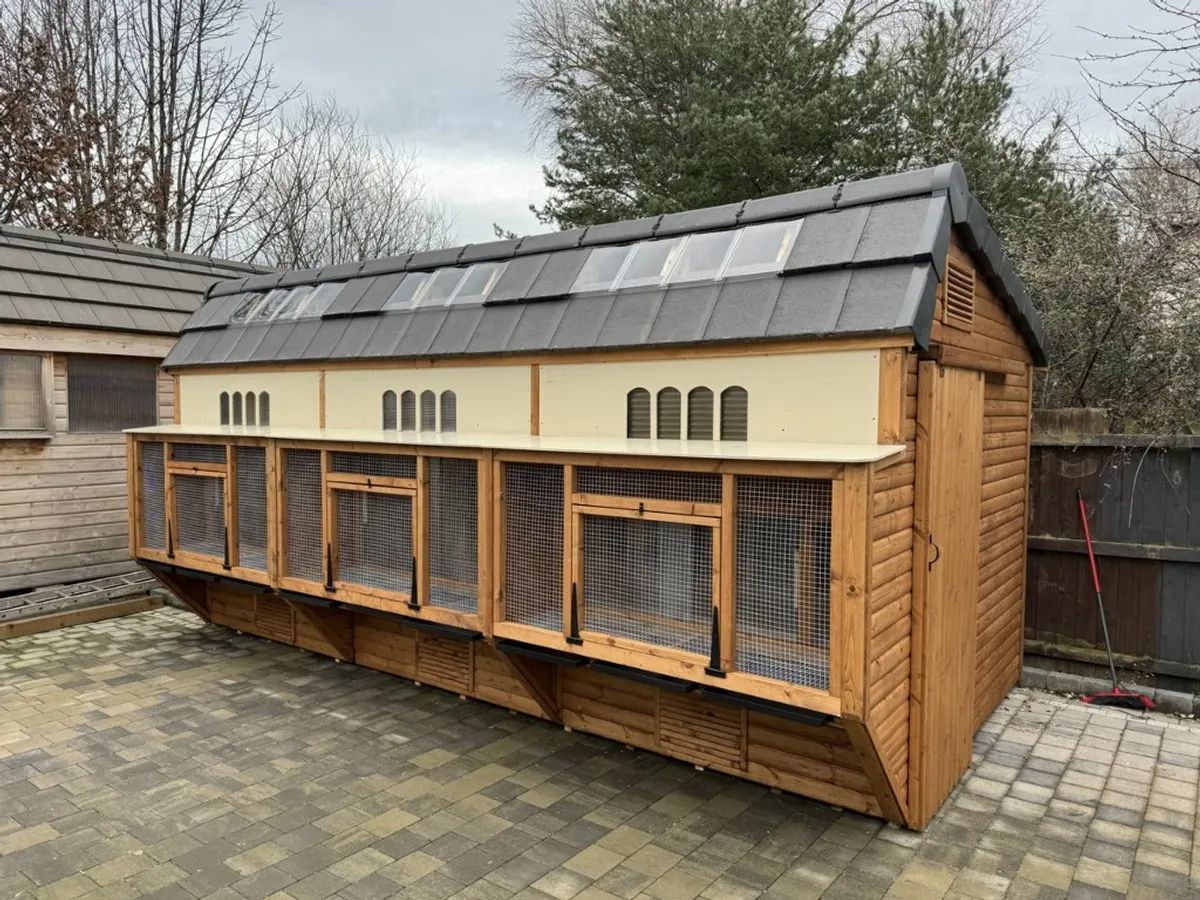
Birds and droppings add a lot of moisture to the air. If it can’t escape, it condenses on cold walls and the roof. The answer isn’t to seal the loft up; it’s to ventilate in a controlled way so stale, humid air is replaced without creating a cold draught on the birds.
- High-level vents or louvres – Let warm, moist air out at the ridge or eaves.
- Adjustable inlets – Give fresh air without a direct blast onto perches. In very cold spells you can close them a bit; in milder weather open them more.
- Internal sliding windows – Allow you to open the front or aviary for a clear-out without leaving the main compartment in a full draught.
A well-designed loft will have ventilation built in from the start. If yours doesn’t, adding ridge or eaves vents and one or two adjustable inlets will make a big difference. Our ventilation guide goes into more detail.
Insulation and cold surfaces
Condensation forms where warm, moist air hits cold surfaces. Insulating the roof and, if needed, the walls reduces those cold spots and helps keep the loft drier. Use materials that don’t absorb water and that birds can’t peck or damage. Insulation also helps keep the loft a bit warmer in winter, which can reduce stress and illness.
Drainage and a dry base
- Raised floor – Keeps the loft off the ground so water doesn’t seep in and vermin are harder to reach.
- Watertight roof – No missing tiles, cracked felt or blocked gutters. Fix any leaks as soon as you spot them.
- Gutters and runoff – Make sure rainwater is carried away from the base and that the ground around the loft doesn’t stay sodden.
A solid, level base (e.g. blocks or concrete) and a well-built floor (e.g. phenolic ply as used in our lofts) make cleaning and drying much easier and help prevent damp from below.
Daily routine
- Remove wet or soiled bedding and replace with dry material.
- Sweep or scrape droppings regularly so they don’t build up and add to humidity and ammonia.
- Check for leaks after heavy rain or snow and fix them promptly.
- Don’t overcrowd – too many birds in a small space will push moisture and ammonia up quickly.
Summary
Keeping your pigeon loft damp-free in winter comes down to: controlled ventilation to remove moisture, insulation to limit condensation, a watertight structure and good drainage, and a consistent cleaning routine. If you’re planning a new loft or upgrading an existing one, we can design for ventilation, insulation and drainage from the outset so you start with a loft that’s easier to keep dry. Request a quote and we’ll work through the options with you.